

A bright smile is not the only feature people associate with healthy, youthful-looking teeth. The shape, length, smoothness, and symmetry of your teeth also influence how your smile appears. When teeth are repeatedly clenched or ground together, those details can gradually change.
A custom night guard for teeth grinding creates a protective layer between the upper and lower teeth while you sleep. Although a night guard cannot reverse existing wear or stop the natural aging process, it can help protect your teeth from additional grinding-related damage. Preserving the natural shape of your teeth may help your smile continue to look healthy and well maintained.
At St. Louis Dental West in Kirkwood, MO, Dr. Victoria Daugherty evaluates patients for signs of tooth wear, cracks, and other damage that may be related to grinding or clenching. When appropriate, she can recommend a custom mouth guard designed around the individual patient’s teeth and bite.
What Is Teeth Grinding?
Teeth grinding, also known as bruxism, includes grinding, clenching, or tightly pressing the teeth together. It can happen while a person is awake or asleep, which means many patients do not realize they are doing it.
Frequent or forceful bruxism can place repeated stress on the teeth and jaw muscles. Possible signs include worn tooth edges, small chips, sensitivity, jaw fatigue, morning headaches, or grinding sounds noticed by a sleeping partner.
Bruxism can have more than one contributing factor. During an evaluation, Dr. Daugherty may ask about stress, sleep patterns, medications, daily habits, and when symptoms occur. This information, together with an examination of the teeth, bite, and jaw, helps determine whether a custom night guard or further evaluation may be appropriate.
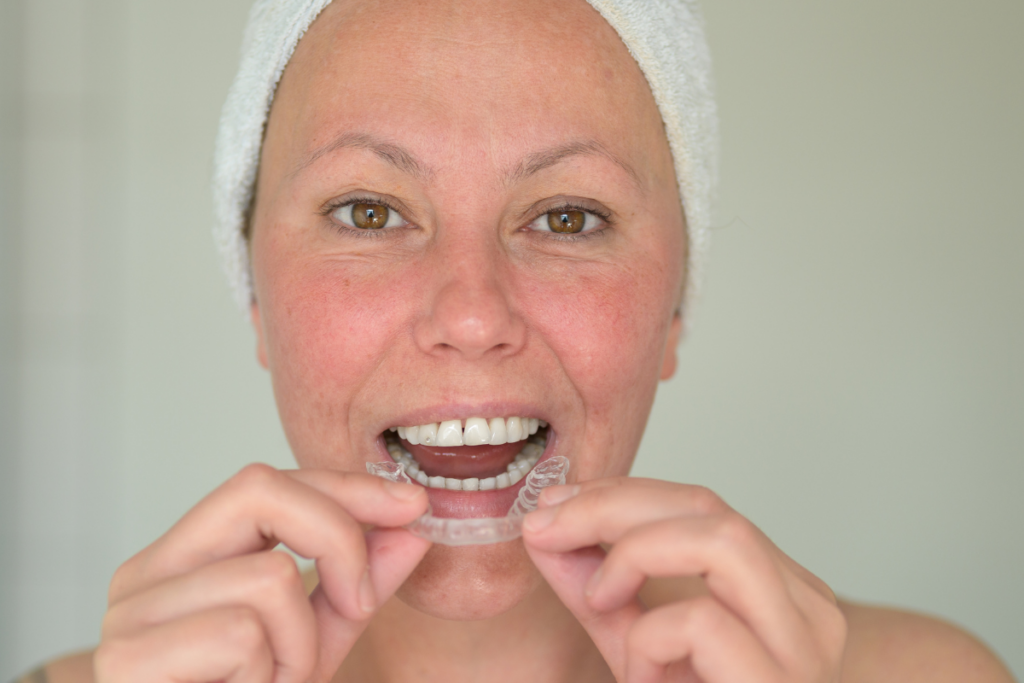
How Does a Night Guard Protect Your Teeth?
A night guard is a dental appliance worn over the teeth, usually while sleeping. It creates a protective barrier so the upper and lower teeth do not grind directly against each other.
A night guard does not necessarily stop the underlying grinding or clenching. Instead, it helps reduce direct tooth-to-tooth contact and distribute some of the pressure that would otherwise be placed directly on the teeth.
When a custom night guard is recommended, its design can account for the patient’s bite, tooth shape, existing dental work, and areas of wear. This allows for a more individualized fit than a standard appliance that is not made specifically for the patient’s teeth and bite.
By reducing direct contact, a properly designed night guard may help limit further:
- Flattening of tooth edges
- Loss of tooth structure
- Chipping
- Cracking
- Wear on fillings and crowns
- Sensitivity related to worn teeth
A night guard is preventive. Existing chips, cracks, sensitivity, or damaged restorations may require separate evaluation and treatment.
What a Night Guard Cannot Do
A night guard can help protect teeth from additional grinding-related stress, but it does not treat every existing dental concern or every possible cause of jaw symptoms.
A night guard does not:
- Rebuild enamel or replace tooth structure already lost
- Repair cracked teeth or damaged restorations
- Whiten discolored teeth
- Guarantee relief from headaches or jaw discomfort
- Treat every cause of facial or jaw pain
- Replace an evaluation for a sleep-related breathing concern
- Serve the same purpose as a sports mouth guard
Night guards, sports mouth guards, and oral appliances for sleep apnea and snoring serve different purposes. A sports guard helps cushion the teeth during activities where an impact may occur. A sleep apnea or snoring appliance is designed to affect the position of the jaw or airway. These appliances should not be used interchangeably.
When grinding may be connected to stress, sleep concerns, a medication, or another health factor, the dentist may recommend discussing those concerns with an appropriate healthcare provider.
What to Expect When Getting a Custom Night Guard
The process begins with a dental examination. Dr. Daugherty can evaluate the teeth for flattened edges, cracks, sensitivity, damaged restorations, and other signs of grinding.
She may also ask about symptoms such as jaw tightness, morning headaches, stress, sleeping patterns, or sounds noticed by a partner. This information helps determine whether a night guard may be appropriate and whether another concern should be investigated.
Next, an accurate model of the teeth is created. St. Louis Dental West uses camera-based digital scanning technology to create a virtual impression without traditional trays and impression material. The resulting digital model can be used to create a customized mouth guard.
Once the guard is ready, the fit and bite are checked. You will also receive instructions about how often to wear it, how to clean it, and when to bring it back for evaluation.
It can take a little time to adjust to sleeping with a new appliance. A guard that continues to feel uncomfortable, causes soreness, or no longer fits properly should be checked rather than modified at home.
How to Care for Your Night Guard
Consistent care helps keep a night guard clean and allows you to notice signs of wear.
Follow the specific instructions provided with your appliance. General care may include:
- Rinsing the guard after each use
- Cleaning it with the method recommended by your dentist
- Allowing it to dry before placing it in its case
- Keeping it in a ventilated protective container
- Storing it away from heat, pets, and young children
- Inspecting it for cracks, rough areas, or changes in shape
- Bringing it to dental appointments for evaluation
The lifespan of a night guard varies. A person who grinds forcefully may wear through an appliance more quickly than someone with mild clenching. Changes to the teeth, bite, or dental restorations can also affect how the guard fits.
Do not continue wearing an appliance that is cracked, distorted, loose, or uncomfortable without asking your dentist to examine it.
Protecting Your Smile From Further Tooth Wear
Nighttime grinding can be easy to overlook because the damage often develops gradually. By the time the teeth appear noticeably shorter or chipped, some natural tooth structure may already have been lost.
A custom night guard cannot stop natural changes to your smile, but it can play an important preventive role. By limiting direct grinding between the teeth, it may help preserve their natural length, shape, and edges while reducing the risk of additional wear.
At St. Louis Dental West, Dr. Victoria Daugherty and her team provide detail-oriented dental care in a calm, privately owned practice. They evaluate each patient individually and use modern technology to support precise treatment planning and a more comfortable experience.
If you have noticed worn teeth, morning jaw tightness, tooth sensitivity, or signs that you may be grinding at night, contact St. Louis Dental West to schedule an evaluation.
Frequently Asked Questions
Can a night guard make my teeth look younger?
A night guard cannot reverse aging or restore tooth structure that has already been lost. It can help protect teeth from additional grinding-related wear, which may preserve their natural shape, length, and overall appearance.
How do I know if I grind my teeth at night?
Possible signs include flattened teeth, chips, sensitivity, jaw tightness, morning headaches, or grinding sounds noticed by a partner. Some people have no symptoms and learn about the wear during a dental exam.
Will a night guard stop me from grinding my teeth?
Not necessarily. A night guard primarily protects the teeth from direct contact and damage. The grinding or clenching activity may continue, so contributing factors and symptoms should still be discussed with your dentist.
Is a custom night guard better than one from a store?
A custom guard is designed around your teeth and bite and can be professionally checked and adjusted. Store-bought guards may fit less precisely and may not provide the same level of comfort or protection.
How often should I replace my night guard?
Replacement timing depends on the amount of grinding, appliance material, fit, and changes to your teeth. Bring the guard to regular dental visits so your dentist can check it for wear, cracks, distortion, or changes in fit.